Two very common concerns, one clear question
Almost everyone has a flaky scalp or a few extra hairs in the brush at some point. Most of the time it is minor and settles with simple care. Sometimes it is a sign of a skin or hair condition that needs proper treatment. This guide explains the difference.
What is dandruff?
Dandruff is flaking of the scalp, often with itching. It is usually linked to seborrhoeic dermatitis, a mild inflammatory condition in which oily areas of skin become flaky. Malassezia, a yeast that lives on most people’s skin, is thought to play a part, along with how sensitive your skin is to it. Dry skin, and irritation from certain hair products, can also cause flaking.
Dandruff on its own does not cause permanent hair loss. However, intense scratching and ongoing inflammation of the scalp can lead to extra shedding, so it is worth treating properly.
Other conditions can look like dandruff, including scalp psoriasis, eczema and fungal infection of the scalp (tinea capitis). These need a different treatment, which is one reason a persistent “dandruff” problem should be examined.
Understanding hair fall
Losing around 50 to 100 hairs a day is considered normal, as hairs naturally complete their growth cycle and are replaced. Hair fall becomes a concern when shedding is clearly heavier than usual, when the hair looks thinner, or when you notice bald patches.

Common reasons for increased hair fall include:
- Telogen effluvium: temporary heavy shedding, often two to three months after a trigger such as high fever, major illness, surgery, childbirth, significant stress or crash dieting.
- Pattern hair loss (androgenetic alopecia): gradual thinning that runs in families, seen as a widening parting in women or a receding hairline and crown thinning in men.
- Alopecia areata: sudden, well-defined round or oval patches of hair loss caused by the immune system.
- Nutritional and medical causes: for example low iron or thyroid problems, which can only be confirmed by tests.
- Hair styling and scalp infections: tight hairstyles over a long time, or fungal infection, can also damage hair.
What you can do at home
- Wash your hair regularly with a gentle shampoo. Regular washing does not cause dandruff.
- For flaking, try an anti-dandruff shampoo with an ingredient such as ketoconazole, zinc pyrithione, selenium sulfide or salicylic acid, and follow the directions on the label.
- Avoid scratching, which irritates the scalp and can make shedding worse.
- Be gentle with your hair: avoid very tight hairstyles and harsh chemical treatments.
- Eat a balanced diet. Do not start supplements for hair fall without advice, as more is not always better.
When should you see a dermatologist?
Home care is reasonable for mild flaking. A clinical assessment is a good idea if you notice any of the following:
Book an appointment if you have
- Flaking or itching that has not improved after a few weeks of regular anti-dandruff shampoo.
- Red, painful, swollen, oozing or crusted areas on the scalp, or thick, stuck-on scale.
- Patches of hair loss, broken hairs or scaly patches, especially in a child.
- Hair shedding that is suddenly heavier, or lasts longer than a few months.
- Gradual thinning, a widening parting or a receding hairline.
- Burning, tenderness or scarring on the scalp.
What to expect at a consultation
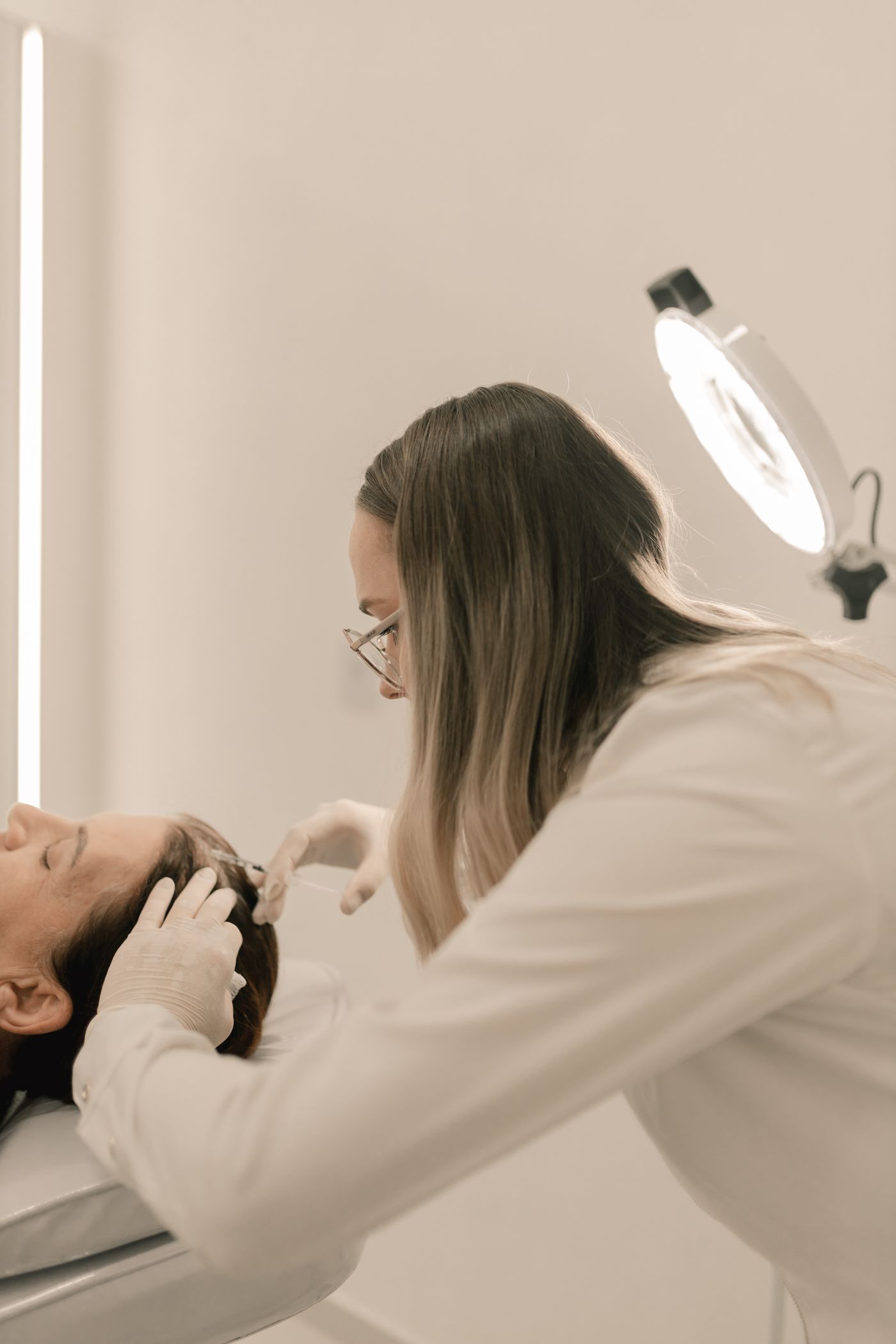
The doctor will ask how long the problem has been present, what products you use, and about recent illness, stress, diet, medicines and family history. The scalp and hair are then examined closely. Depending on what is found, further steps may include a gentle hair pull test, a magnified look at the scalp, blood tests, or a scalp scraping if an infection is suspected. Treatment is then based on the diagnosis, and you will be told what results to realistically expect.
Key points
- Mild flaking is common and often improves with the right shampoo.
- Dandruff does not directly cause permanent hair loss, but scratching and inflammation can increase shedding.
- Heavy or prolonged shedding, bald patches and thinning always deserve a proper check.
- Treatment works best when it is matched to the actual cause.
This article is for general information only and is not a substitute for medical advice. Please see a doctor for diagnosis and treatment.
Worried about your scalp or hair?
Book a consultation for a careful assessment and a plan that suits you.